
EXAMPLES OF IAC ADVOCACY POSITIONS
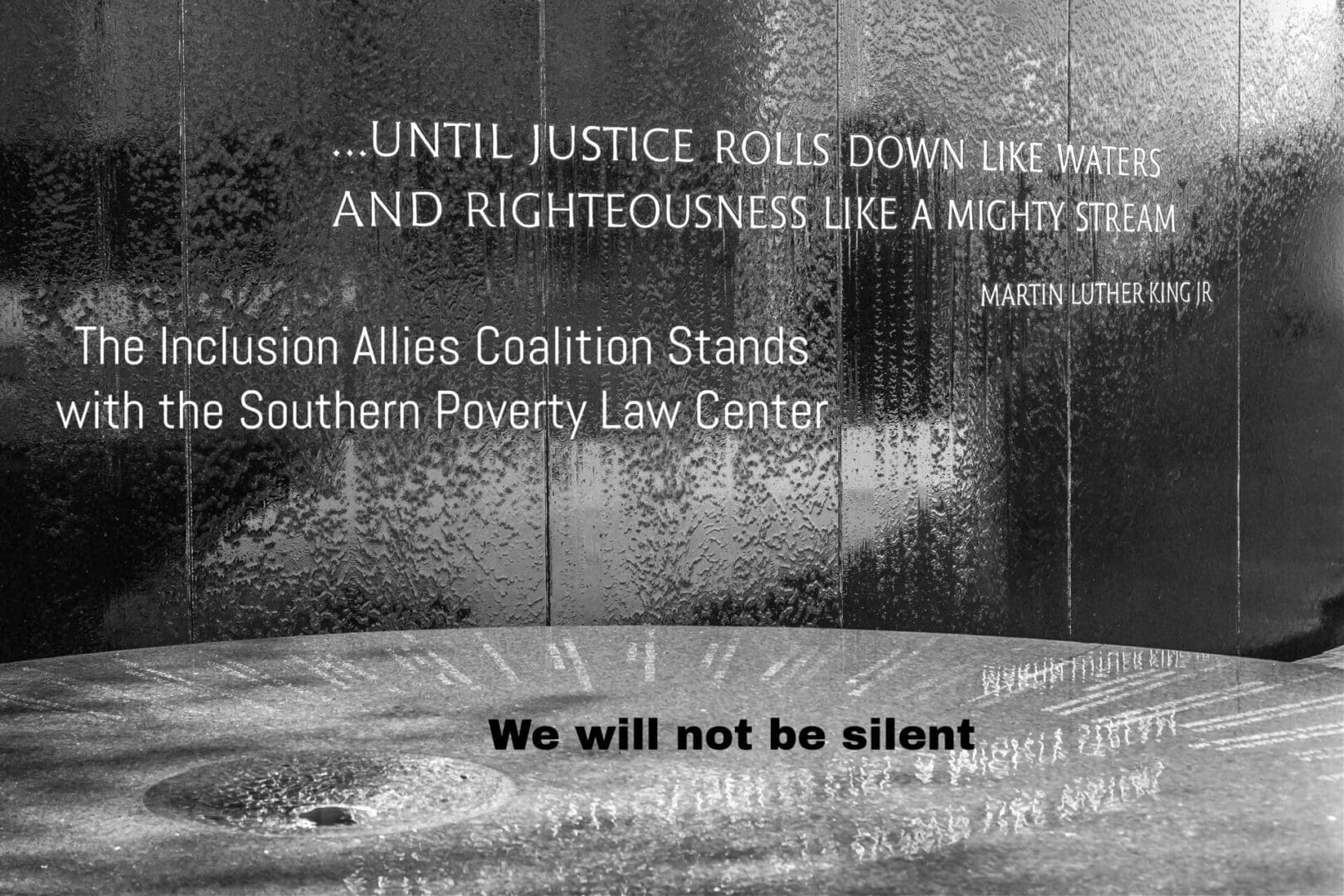
IAC STANDS WITH THE SOUTHERN POVERTY LAW CENTER (splc)
Written by Bart Bailey, Inclusion Allies Coalition; Principal Consultant and Owner, Courage to Care, LLC
The Inclusion Allies Coalition (IAC) stands with the Southern Poverty Law Center (SPLC) at a time when civil rights work is once again under pressure. This week, the Department of Justice announced an 11-count indictment, charging the organization with “manufacturing the extremism it purports to oppose by paying sources to stoke racial hatred,” and then hiding those payments.
The SPLC adamantly denies the charges. The IAC does not confuse accusation with proof, and we believe due process, truth, and accountability must guide public life.
The IAC believes the SPLC is a courageous champion of civil rights, which are defined as legally guaranteed protections and freedoms that ensure all individuals receive equal treatment and protection under the law, free from discrimination.
The SPLC works in partnership with communities to dismantle white supremacy, strengthen intersectional movements, and advance the human rights of all people.The mission of the Department of Justice is to uphold the rule of law, protect civil rights, and serve the public with integrity and impartiality. These missions are aligned and should not be in conflict with one another. Justice must be lived, not only stated. When civil rights organizations are targeted, the work of protecting communities from hate, discrimination, and extremism is weakened.
The Inclusion Allies Coalition is a coalition of organizations and practitioners committed to diversity, equity, inclusion, and accessibility within our organizations and society. We exist to deepen understanding and advance just and humane practices across all differences.
We stand with SPLC, with civil rights defenders, and with all who refuse to be silenced. We call on our partners, practitioners and the public to remain grounded in truth, to protect the work of justice, and to meet this moment with courage, clarity, and accountability.
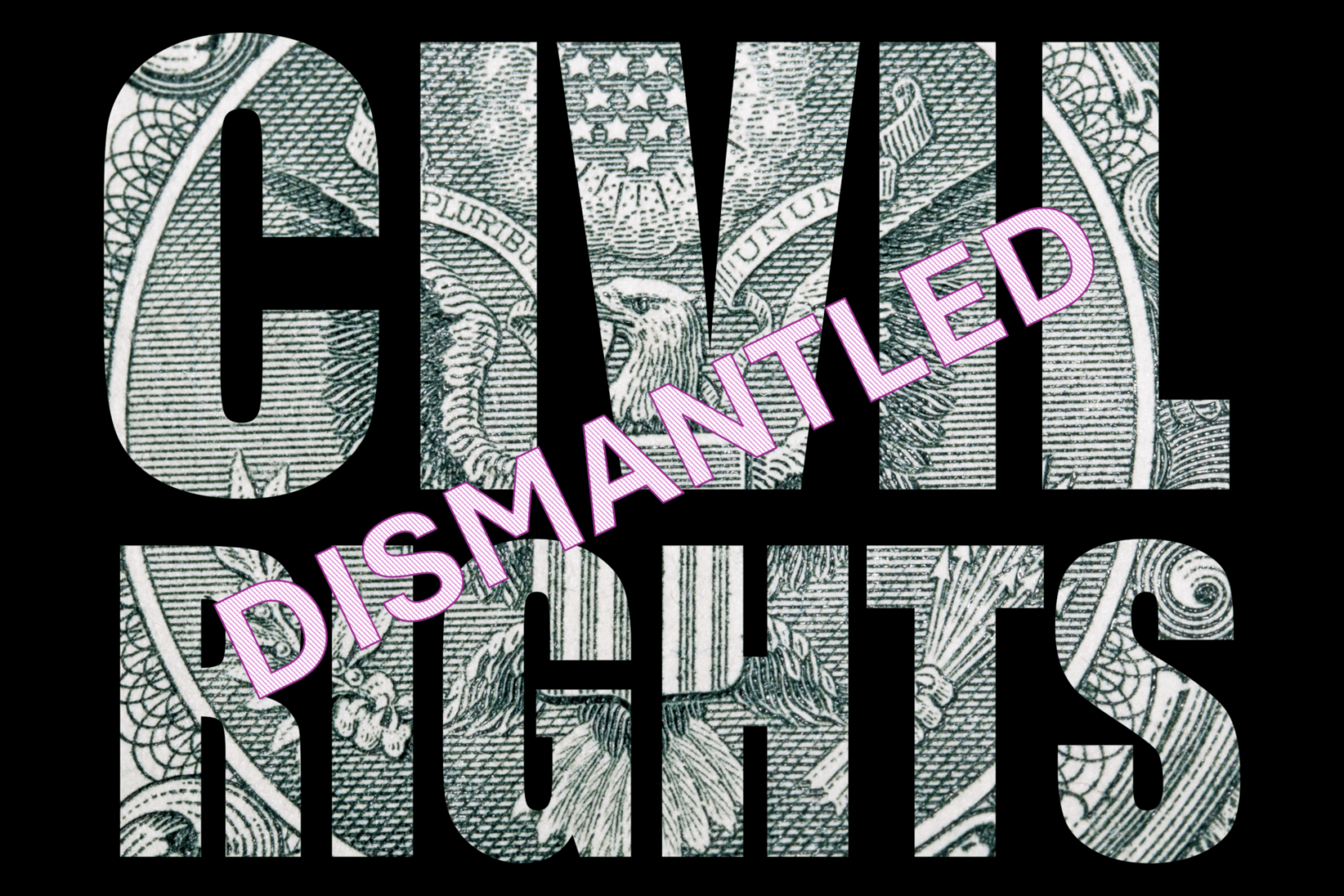
The Architecture of Exclusion: How This Administration Is Dismantling Civil Rights Brick by Brick
Written by Effenus Henderson, IAC Advocacy Committee; Founder and Principal of HenderWorks Consulting
I have spent decades working at the intersection of diversity, equity, and inclusion — in corporate boardrooms, community organizations, and civil society. I have watched progress come slowly, painfully, and always against resistance. But what I am witnessing today is different in kind, not merely in degree. What is unfolding before us is not simply a policy disagreement or a change in political priorities. It is the deliberate construction of what I call an architecture of exclusion — a coordinated, multi-front assault designed to make civil rights not just politically unfashionable, but legally dangerous to defend.
To understand what is happening, you have to look at the whole structure, not just the individual bricks.
The Language Is Being Stolen First
Every architecture begins with a blueprint. In this case, the blueprint is linguistic. The federal government has now banned or flagged more than 350 words and phrases from official communications, scientific research, and agency websites. I am not speaking of obscure technical jargon. I am speaking of words like discrimination, inequality, diversity, equity, women, disability, Native American, mental health, racism, and even safe drinking water.
PEN America, which tracks these erasures, notes that scientists are already self-censoring their grant proposals in response — not because the science has changed, but because they fear federal retaliation if they use the wrong words. When you cannot name a thing, you cannot fight it. That is not an accident. That is the design.
“How can we have intelligent or difficult conversations,” PEN America’s Jonathan Friedman asks, “if we can’t even use the words, the most basic unit of meaning?” I share that concern deeply. This is not about preferred terminology. This is about making the very vocabulary of civil rights legally and professionally hazardous.
The Organizations Are Being Targeted Next
Once the language is suppressed, the institutions that carry that language into action become the next targets. The indictment of the Southern Poverty Law Center is the latest and most alarming example of this pattern.
For over fifty years, the SPLC documented hate groups, took on the Klan, fought Christian nationalism, and protected communities that had no other advocate. Their offices were firebombed in 1983. Their people have faced threats that would silence most of us. They kept going. And now the Department of Justice has indicted them.
This is not an isolated prosecution. This is part of a coordinated effort to criminalize the act of civil rights work itself. An administration that has pardoned January 6 insurrectionists — some with documented ties to white supremacist organizations — while indicting civil rights lawyers and advocates has made its values unmistakably clear. It is rewriting the moral ledger of this country, turning heroes into criminals and criminals into heroes.
The False Claims Act as a Weapon of Silence
The third pillar of this architecture is financial terror. The administration’s March 2026 executive order targeting DEI activities among federal contractors does not simply prohibit certain programs. It weaponizes the False Claims Act — a Civil War-era anti-fraud statute — against any contractor that continues to support diversity initiatives.
The FCA allows the government to seek treble damages and empowers private whistleblowers to file suit on its behalf. The recent $17.1 million settlement with IBM — announced as part of a “Civil Rights Fraud Initiative” — was a warning shot. It signals to every company doing business with the federal government: support diversity, and you may be sued for fraud.
A coalition of civil rights and higher education organizations has now filed suit arguing this order violates the First Amendment’s protections of free speech and free association. Their case is compelling. By equating all discussion of race and ethnicity with illegal discrimination, the order sweeps in lawful, protected activities: targeted recruitment, employee resource groups, speaker panels, even advertising in minority-owned publications. The National Association of Minority Contractors’ DMV chapter has already reported that corporate sponsors are afraid to continue their support, threatening 90% of the organization’s operating budget. That is not compliance with the law. That is the silencing of a community.
The Pattern Is the Point
Taken separately, each of these actions can be rationalized, litigated, or minimized. Taken together, they form something unmistakable: a systematic effort to defund, delegitimize, and ultimately dismantle the infrastructure of civil rights in America.
Ban the words. Indict the organizations. Threaten the funders. Purge the websites. The target in every case is the same: the ability of communities of color, immigrants, LGBTQ+ people, women, workers, and people with disabilities to advocate for themselves, to be seen, to be named, and to be protected.
This is what I mean by the architecture of exclusion. It is not a single wall. It is a fortress, built brick by brick, designed to make justice structurally inaccessible to those who need it most.
We Cannot Afford Silence
I want to be clear about what is at stake. Civil rights organizations do not just file lawsuits. They train poll workers. They staff domestic violence hotlines. They stop discrimination before it destroys a family. When you dismantle these organizations, real people lose real protections in their real, daily lives.
The polling data is sobering but also clarifying: 72% of voters are concerned about rights and freedoms being taken away. 75% believe the government must do more to protect civil and human rights. The people of this country understand what is happening, even when their leaders refuse to name it.
We refuse to be silenced. Those of us who have dedicated our lives to this work did not do so because it was easy or because the political winds were favorable. We did it because the alternative — a country where the language of justice is outlawed, where civil rights defenders are criminalized, and where communities are left unprotected — is a country none of us should accept.
An attack on one is an attack on all. The architecture of exclusion must be torn down. And we must be the ones to do it.

White men and discrimination: The Headline is the strategy
By Effenus Henderson, Inclusion Allies Coalition Advocacy Committee; Co-Director at Institute for Sustainable Diversity & Inclusion
The Headline Is the Strategy
Look closely at the headline we are being asked to accept.
White men, we are told, are now the most disadvantaged group in America. DEI is framed as a deliberate program of discrimination. Civil rights enforcement is being repositioned as a tool to correct “anti-White bias.” This is not a data-driven conclusion. It is a narrative strategy. And like many headlines designed to provoke rather than inform, it relies on emotional reaction instead of context.
Grievance is not a lived reality. It is a manufactured narrative designed to stop progress.
What the Data Actually Says
If disadvantage is systemic, it should be visible in outcomes. Yet white men continue to dominate leadership, wealth, and institutional power in the United States — from corporate boardrooms to political office, from equity partnerships to executive compensation. DEI did not create this imbalance, and equity efforts have not reversed it. The presence of diversity initiatives does not erase decades — or centuries — of accumulated advantage.
You cannot claim systemic disadvantage while occupying the majority of decision-making power.
FLAW at Work: When Logic Is Intentionally Reversed
This moment represents FLAW — False Logic At Work. Equity is reframed as exclusion. Representation is cast as retaliation. Accountability is described as discrimination. This inversion is not accidental. It allows those who feel threatened by change to occupy the moral high ground without engaging the facts.
When progress is framed as persecution, grievance becomes the weapon of choice.
DEI Challenges Structures
Systems produce outcomes. Leadership pipelines are designed. Networks are inherited. “Merit” is cultivated through access long before performance is evaluated. DEI challenges these structures by asking who benefits, who is excluded, and why. That scrutiny is uncomfortable for systems that depend on silence.
DEI doesn’t threaten fairness — it threatens insulation from scrutiny.
Majority/Next: The Future Behind the Fear
The real anxiety driving today’s grievance politics is not DEI. It is Majority/Next — a future where leadership reflects the full breadth of American society. Where influence is shared rather than hoarded. Where power is earned in real time, not inherited through legacy advantage. For those invested in permanent dominance, equality feels like loss.
When dominance is mistaken for normalcy, equality feels like oppression.
Read Past the Headline
Real journalism demands more than a provocative headline. It demands context, evidence, and honesty. When we read past the grievance narrative, we see what is actually happening:
- Civil rights language is being repurposed to stall civil rights outcomes
- Fear is being manufactured to slow demographic and leadership change
- Progress is being framed as a threat rather than a correction
Grievance survives only when context is removed.
The Truth They Don’t Want Printed
Diversity is not radical. Equity is not revenge. Inclusion is not exclusion. Exclusion has always been the defect. Grievance is simply the headline those afraid of change need you to believe — long enough to stop the story of progress from being written at all.
Exclusion is the defect. Grievance is the distraction.

Do White People Lose When Civil Rights Win?

IAC RESPONDS TO THE DEREK CHAUVIN GUILTY VERDICT
After months of anxiously waiting for a verdict on the George Floyd murder that would test the impartiality of the judicial system against a legacy of racial injustice and countless incidents of police brutality against people of color, we learned that Derek Chauvin was found guilty of killing George Floyd. While the verdict held Derek Chauvin accountable, it was just one case, and one step in addressing systemic racism which devalues the lives of Black people. The journey to true justice is a long one, and this step should both give us hope and strengthen our resolve to take that journey together.
The IAC stands in full solidarity with the Floyd family and with all families whose loved ones in the U.S. or around the world have been senselessly killed. Daunte Wright, for example, was a Black man who was fatally shot by a police officer after a routine traffic stop on April 11, just a few miles from where Chauvin stood trial. And since Duante there have been more killings in the Black community by policemen, as we learned of two more this week—Andrew Brown, an unarmed father of 10 in North Carolina, and 16-year-old Ma'Khia Bryant in Ohio. These deaths remind us of the constant discrimination people face due to the color of their skin and of the exhaustion and frustration many people are feeling as we continue to work towards social transformation.
We also recognize the impact Floyd’s murder has created on a national and global scale to build awareness about how deep racism goes in many countries. His death sparked one of the largest protest movements in American history. From Los Angeles to Paris to Tokyo, people have participated in Black Lives Matter (BLM) events to demonstrate action. Corporations have publicly vowed commitment to Black/African Americans and other marginalized communities.
Close to one year after George Floyd’s murder, we encourage our members, and organizations in general, to not let up on the commitments they made a year ago. This is not the time for performative activism, but for real change and for all of us to become collaborators, accomplices, and co-conspirators who fight injustice and promote equity in the workplace. Our May IAC webinar will be devoted to understanding what companies have done one year following George Floyd’s death.
Our work is far from done, but we believe that we can advance greater inclusion in the global workplace by collaborating with individuals, like you, who share our beliefs and by advocating for diversity, equity, and inclusion for all.
In allyship,
IAC Founders and IAC Leadership Council
INCLUSION ALLIES COALITION SPEAKS OUT ON ZERO-TOLERANCE IMMIGRATION POLICY
The Inclusion Allies Coalition is a group of close to 750 organizations and individuals committed to diversity, equity, and inclusion within organizations and society. We strive to advocate for and serve as allies to those who are marginalized by policies and practices that exclude, discriminate against, or otherwise lead to people being treated unfairly. Founded in 2017 in response to the massive polarization on a number of socio-political issues exacerbated by the 2016 US Presidential election, the Coalition carefully considers the positions that it takes. We believe that inclusion means that we consider divergent viewpoints and attempt to bridge our differences with greater understanding and acceptance. We feel that we must speak up as a united body when there are situations that jeopardize the values of inclusion.
As diversity practitioners, we are often asked if there are boundaries or limits to inclusion. The answer is yes. For us, inclusion means that we care about each other’s well-being. It means that we do not intentionally do harm to others. It means that we are empathetic and show compassion. Those whose actions would suggest the opposite are not practicing inclusion.
We were heartened to hear that by Executive Order President Trump put a stop to the practice of separating immigrant children from their parents. This practice was abhorrent and totally violated the values of inclusion and equity. Moreover, it violated the values of most religions and the espoused values of our country. Even with the halt of this practice, we continue to worry about the fate of these 2000 plus children and their families. So much damage has been done. How and when will they be reunited with their parents? What are the irreversible psychological effects that many experts believe these children will face? More broadly, we remain concerned that as the Zero Tolerance policy continues to be enforced, inhumane treatment will not stop. And Attorney General Jeff Sessions has excluded fears of domestic abuse or gang violence as valid reasons for granting asylum in the United States.
How do we wonder, in modern-day America could this be happening? There was no immigration law mandating that children be separated from their parents. Why would we exclude fears of personal violence as reasons for granting asylum? Where is the compassion that the President said led him to sign the executive order?
The Inclusion Allies Coalition members are dedicated in their respective roles to fostering practices, behaviors, and mindsets that respect and value the dignity of every individual. We are about righting the wrongs of global injustices that have occurred since the beginning of time and unfortunately continue today. The practice of separating children from their parents is reminiscent of this horrible practice used during slavery and in Nazi Concentration and Japanese Internment Camps. It is incomprehensible to think that in 2018, our moral compass would allow us to repeat such abuse and inhumane acts.
Admittedly, the immigration issue in this country is complex but lest we forget that we are a country born of immigrants and lest we forget the words at the base of the Statue of Liberty: “Give me your tired, your poor, your huddled masses yearning to breathe free, the wretched refuse of your teeming shore. Send these, the homeless, tempest-tossed to me, I lift my lamp beside the golden door!”
What can you do?
Speak out via your social media networks. Use your influence and platforms.
Attend a protest or vigil to show solidarity.
Donate to and support organizations, efforts that are being led by the communities that are impacted.
Call your elected officials. [Immigrant children detained-IAC position]
If you are a leader, hold your offices of D&I, CSR, Government Relations accountable for aligning themselves with equity and inclusion inside and outside the organization.
We often do not think that as one person we can make an impact. You can and we hope that you will join with The Inclusion Allies Coalition in denouncing this repulsive practice.
PROTECTING THE CIVIL AND HUMAN RIGHTS OF ASIANS AND ASIAN-AMERICANS
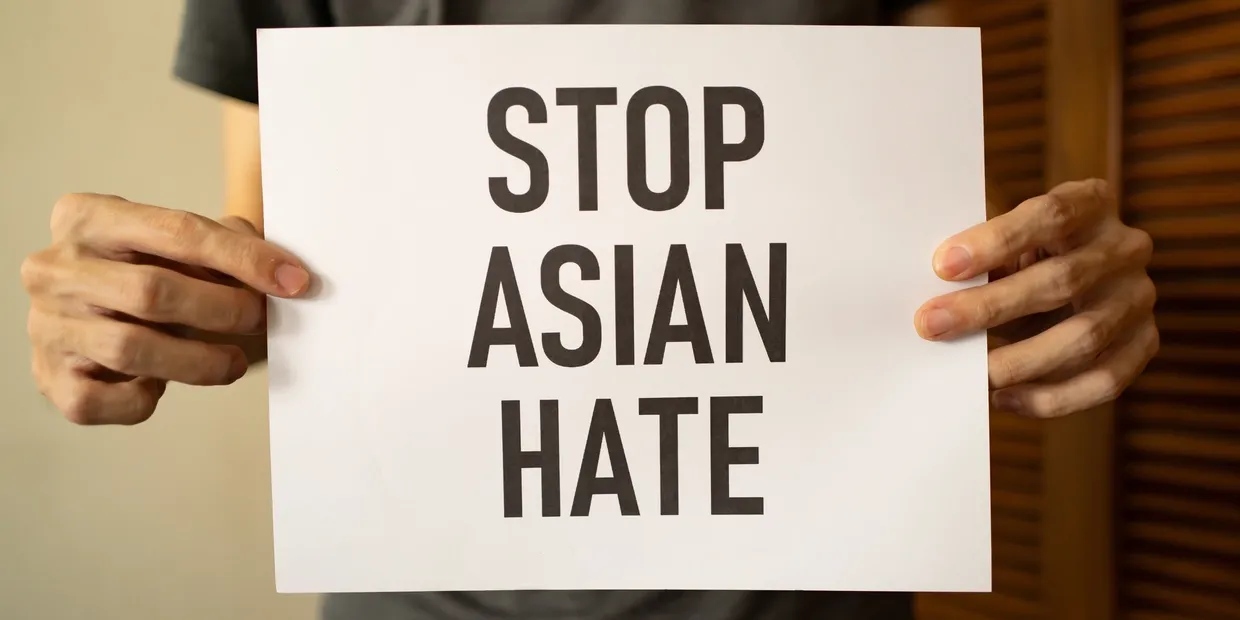
The Inclusion Allies Coalition (IAC) stands against all hate and discrimination directed against the Asian American Pacific Islander (AAPI) community in the U.S. over the last year and especially in recent months. False stereotypes, misrepresentation, and heightened social media against Asians and Asian Americans have led to an increase in violence, culminating in last week's horrific events in Atlanta. We stand together and in solidarity with our Asian and Asian American members, colleagues and partners and uphold inclusion for all. We take seriously our vision to be the leading voice for DEI practitioners, globally and to work to end hate crimes directed against members of the community. In our April webinar, we will delve more deeply into this critical topic and share resources for advocating change. In the interim, please find below several ways to stand together with our Asian and Asian American colleagues.
Asian Americans Advancing Justice
Stop AAPI Hate
Act to Change
Asian Americans Advancing Justice